
Zimbabwe’s Real SME Sales Stack Is Already Here: WhatsApp and EcoCash
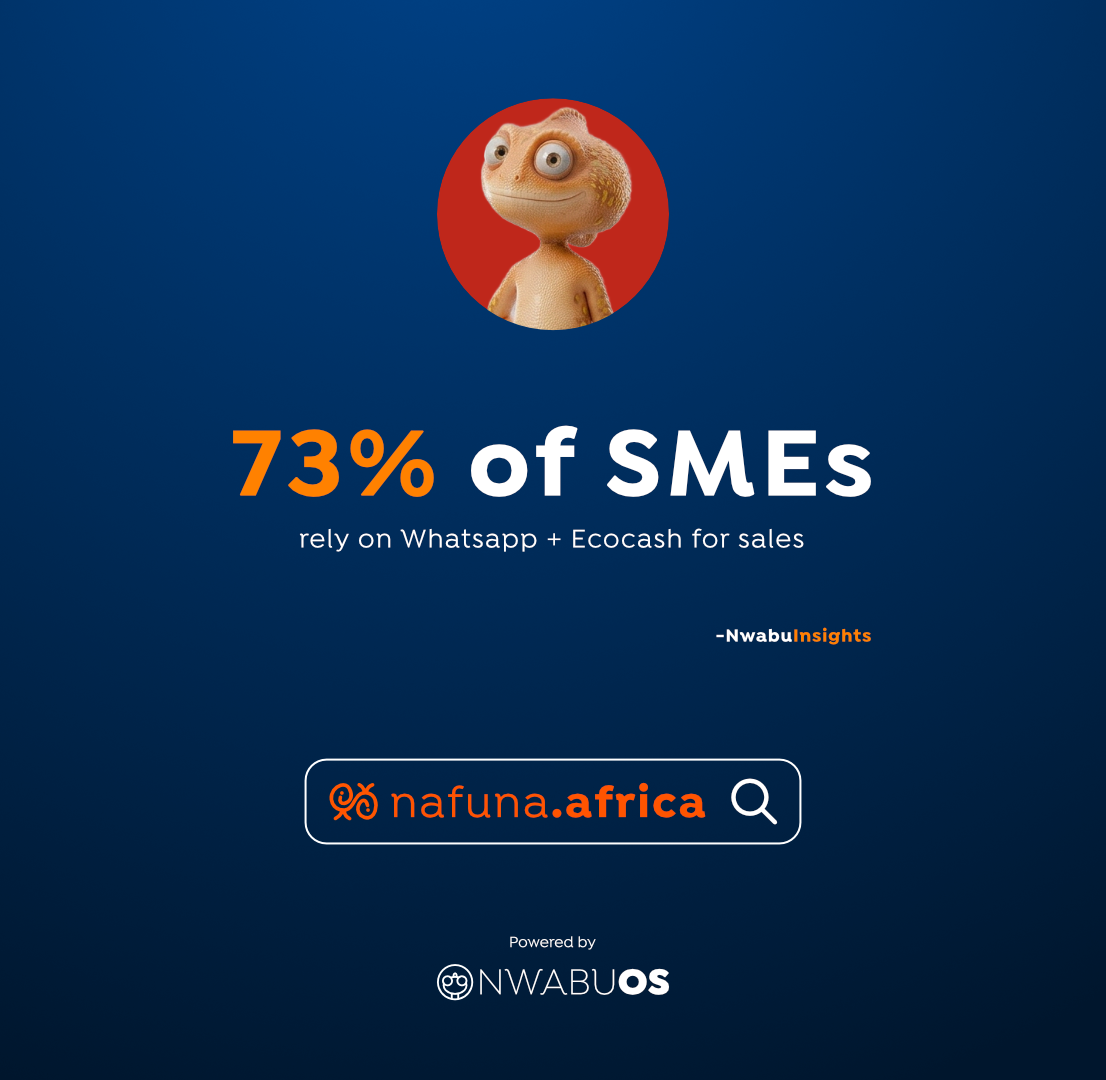
According to Nwabu Insights, 73% of SMEs rely on WhatsApp and EcoCash for sales. That statistic matters because it captures a reality that is often overlooked when people discuss digital transformation in Africa: businesses do not always adopt technology through formal websites, card-payment gateways, or complex enterprise software. They adopt the tools that are accessible, trusted, and already embedded in customers’ daily lives.
For many small and medium-sized businesses in Zimbabwe, the path from customer interest to a completed sale does not begin on a sophisticated e-commerce website.
It starts with a WhatsApp message.
A customer sees a product on Facebook, Instagram, TikTok, or through a friend’s WhatsApp Status. They send a quick “How much?” message. The business replies with photos, prices, delivery details, and an EcoCash number. Payment is made, proof of payment is shared, and the order moves forward.
According to Nwabu Insights, 73% of SMEs rely on WhatsApp and EcoCash for sales. That statistic matters because it captures a reality that is often overlooked when people discuss digital transformation in Africa: businesses do not always adopt technology through formal websites, card-payment gateways, or complex enterprise software. They adopt the tools that are accessible, trusted, and already embedded in customers’ daily lives.
For Zimbabwean SMEs, WhatsApp and EcoCash have become more than communication and payment tools. Together, they form a practical sales infrastructure.
A sales process built around conversation
Traditional e-commerce assumes that customers want to browse a catalogue, add products to a cart, enter delivery details, and pay through a checkout page.
That model works well in many markets, but it does not always match how people buy in Zimbabwe.
Customers often want to ask questions before committing. They may want to confirm whether an item is available, negotiate a quantity, request a different colour or size, ask about delivery, or verify that a business is legitimate. WhatsApp supports this naturally because it turns the buying process into a direct conversation.
For the business owner, the benefits are equally practical:
It is low-cost and easy to set up.
Customers already know how to use it.
Product photos, videos, voice notes, location pins, and catalogues can be shared instantly.
Conversations create a record of customer needs and recurring questions.
Follow-ups can happen through broadcasts, Status updates, and direct messages.
The same channel can support sales, customer service, delivery coordination, and repeat orders.
A boutique in Norton, for example, can post new stock on WhatsApp Status in the morning, answer enquiries throughout the day, receive EcoCash payments, and dispatch products without ever needing a traditional online store.
That is not a temporary workaround. It is a functioning commercial system.
EcoCash closes the loop
A sales conversation is only useful if it leads to payment. This is where EcoCash becomes essential.
For many SMEs, EcoCash reduces friction at the most important point in the customer journey: the moment someone decides to buy. Instead of asking a buyer to visit a bank, use a card they may not have, or navigate a payment gateway they do not trust, the seller can simply provide a familiar mobile-money payment option.
The customer pays, sends confirmation, and the seller processes the order.
This combination of WhatsApp and EcoCash works because it fits the conditions under which many local businesses operate:
Mobile phones are more common and accessible than desktop computers.
Customers are already active on messaging platforms.
Trust is built through direct communication and referrals.
Payments need to work for both formal and informal businesses.
Sales often depend on flexibility, quick responses, and relationship-building.
In effect, WhatsApp handles discovery, engagement, negotiation, customer support, and retention. EcoCash handles settlement. Together, they remove much of the complexity that can make digital commerce feel inaccessible to smaller businesses.
The opportunity is not to replace the stack
There is sometimes a tendency to view WhatsApp-based selling as a sign that a business has not yet “graduated” to proper e-commerce.
That misses the point.
The question is not whether every SME needs to abandon WhatsApp for a website. The question is how to make this existing sales stack more organised, discoverable, reliable, and scalable.
An SME does not necessarily need a large online shop before it can improve its digital operations. It can begin with practical upgrades:
Use WhatsApp Business rather than a personal account.
Create a clear product catalogue with current prices.
Set up greeting messages, away messages, and quick replies.
Organise customer contacts using labels such as “new lead,” “paid,” “delivery,” and “repeat customer.”
Publish products and promotions consistently through WhatsApp Status.
Make payment instructions simple and visible.
Use delivery partners or clear collection points.
Maintain a lightweight customer and sales record.
Build a public business profile that customers can find outside their personal networks.
These changes do not replace the conversational model. They make it work better.
Discovery remains the missing piece
WhatsApp is powerful once a customer has your number. But that is also one of its limitations: a business can be difficult to discover if it relies only on existing contacts, referrals, Status views, and social-media posts.
This is where searchable business platforms matter.
A customer should be able to find a local baker, hardware supplier, freelance designer, salon, transport service, clothing brand, or agricultural supplier without already being inside the owner’s contact list. The business should have a visible digital presence that gives potential buyers enough confidence to start a conversation.
That is the gap platforms such as Nafuna can help address: connecting customers with African businesses while allowing those businesses to continue selling through the channels their customers already use.
The goal is not to force a small business into a complicated system it cannot maintain. It is to improve visibility and trust around the workflow it already understands.
A customer searches. They discover a verified or well-presented business. They view products or services. They contact the business on WhatsApp. They pay through EcoCash. The business fulfils the order.
That is a more realistic digital-commerce journey for many SMEs than copying a model designed for entirely different infrastructure and consumer behaviour.
What this means for African business technology
The 73% figure points to a wider lesson for founders, developers, policymakers, and investors.
The strongest business tools are not always the most technically elaborate. They are the tools that fit how people already communicate, pay, make decisions, and build trust.
For African SMEs, innovation should not begin with the assumption that the existing way of doing business is broken. It should begin by understanding what already works and then removing the friction around it.
That means building technology around:
Mobile-first customer behaviour.
Messaging-led sales conversations.
Local payment methods.
Informal and relationship-based trust systems.
Low-data, low-training, practical workflows.
Visibility for businesses beyond their immediate contact networks.
The future of SME commerce may include websites, automated agents, integrated inventory, customer relationship management systems, delivery APIs, and richer online catalogues. But the foundation is already visible today.
It is in the WhatsApp chat where the customer asks, “Is this still available?”
It is in the EcoCash confirmation that turns interest into revenue.
And it is in the thousands of SMEs that are already building their businesses one conversation at a time.
Your story deserves to be heard.
Turn your complex ideas into captivating, culturally authentic campaigns and automated creative workflows.